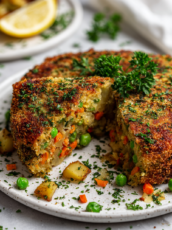
Choosing the right potato can make or break your croquettes. I’ve learned that Yukon Golds give a buttery, tender interior, while Russets create crispier exteriors. It’s a small detail, but it changes everything in the final bite.
I used to think all potatoes were the same, just a blank canvas. But once I started experimenting with different varieties, I found that each one brings a distinct personality—fluffy, starchy, or creamy—that influences the texture and flavor of these humble bites. It’s a kind of quiet magic in the kitchen.
Making croquettes is a bit of a ritual. The smell of frying potatoes, the crackle of the breadcrumb crust, the anticipation of that perfect golden hue—these moments remind me why I love cooking. It’s simple, honest work, but when the potatoes are just right, the result feels special, almost like a small celebration in every bite.
Focusing on the overlooked importance of choosing the perfect potato for crispy, fluffy croquettes, and how different varieties change the texture and flavor, making each batch uniquely satisfying.
The overlooked magic of selecting potatoes
- Realized how the right potato makes all the difference—fluffy versus dense, it’s a game changer.
- Fighting the urge to overstuff these croquettes—less is more, and they stay crispy longer.
- Nothing beats the smell of golden, crispy croquettes cooling on a wire rack—pure comfort in my kitchen.
- Missed the mark once by rushing the frying—patience really makes them shine, crisp and tender all over.
- Every time I get the texture just right, I feel a small victory—these bites are worth the effort.
The magic behind choosing potatoes
Potato croquettes have been a part of my family gatherings for as long as I can remember, but it was a lazy Sunday afternoon when I truly fell in love with perfecting their texture. I was experimenting with different potato types, trying to get that elusive balance between crispy outside and fluffy inside. That moment of discovery—when I finally got the golden crust to crackle just right—felt like a small victory worth sharing. Now, I see each batch as a quiet celebration of simple ingredients transformed by patience and a little bit of practice.
Historical snippets about croquettes
- Potato croquettes originated in France, where they were called ‘croquettes de pommes de terre’ in the 19th century.
- The technique of breading and frying potatoes likely traveled through French cuisine into other European countries, becoming a popular snack.
- Traditionally, croquettes used leftover mashed potatoes, making them a clever way to reduce waste and stretch ingredients.
- Different regions have unique twists—Spanish versions often include ham or chorizo, adding smoky depth.
- The crispy exterior and tender interior balance was perfected over centuries, with each cook adding their own touch.
Key ingredients and their secrets
- Yukon Gold potatoes: I love their buttery, tender flesh that makes the croquettes luxuriously soft inside. Swap in russets for a crispier finish, but beware—they’ll be less creamy.
- Butter: I use plenty to enrich the mash, making each bite feel indulgent. Olive oil can substitute for a lighter, slightly fruitier flavor, though it won’t be as rich.
- Eggs: They help bind the mixture together, giving the croquettes structure. Flax eggs work in a pinch but might make them a little less cohesive.
- Breadcrumbs: I prefer panko for extra crunch and lightness, but regular fine breadcrumbs will do if you want a softer crust. Toast them lightly for extra flavor.
- Flour: Dusting the croquettes in flour gives the crust a good foundation. Cornstarch can be a gluten-free alternative with a slightly lighter crunch, if you prefer.
- Oil for frying: I use vegetable or canola oil for a neutral, high-heat fry that crackles beautifully. For a deeper flavor, try rendered duck fat or bacon fat, if you’re feeling adventurous.
- Salt & pepper: Season generously, especially the potato mash—these simple seasonings make or break the flavor balance. A pinch of smoked paprika can add a subtle smoky note if you like.
Spotlight on key ingredients
Yukon Gold potatoes:
- I love their buttery, tender flesh that makes the croquettes luxuriously soft inside. Swap in russets for a crispier finish, but beware—they’ll be less creamy.
- Butter: I use plenty to enrich the mash, making each bite feel indulgent. Olive oil can substitute for a lighter, slightly fruitier flavor, though it won’t be as rich.
- Eggs: They help bind the mixture together, giving the croquettes structure. Flax eggs work in a pinch but might make them a little less cohesive.
Breadcrumbs and frying oil:
- Breadcrumbs: I prefer panko for extra crunch and lightness, but regular fine breadcrumbs will do if you want a softer crust. Toast them lightly for extra flavor.
- Oil for frying: I use vegetable or canola oil for a neutral, high-heat fry that crackles beautifully. For a deeper flavor, try rendered duck fat or bacon fat, if you’re feeling adventurous.
Notes for ingredient swaps
- Dairy-Free: Use coconut milk or dairy-free butter instead of regular butter, which slightly alters the richness but keeps them tender.
- Vegan: Substitute eggs with flaxseed meal mixed with water; it helps bind, though the texture might be a bit denser.
- Low-Starch Potatoes: Swap Yukon Golds for waxy potatoes like red or new potatoes, which will make the croquettes less fluffy but more firm.
- Gluten-Free: Use gluten-free breadcrumbs and rice flour for coating; expect a slightly different crunch but still satisfying.
- Extra Crispy: Incorporate finely grated Parmesan or Pecorino into the breadcrumb coating for an extra savory crunch and aromatic boost.
- Herb Variations: Add finely chopped fresh herbs like parsley or chives into the mash for a fresh, vibrant flavor.
- Spicy Kick: Mix a pinch of cayenne or smoked paprika into the breadcrumbs for a subtle spicy note that wakes up the palate.
Equipment & Tools
- Large pot: Boil potatoes efficiently
- Potato masher or fork: Mash potatoes smoothly
- Mixing bowl: Combine ingredients
- Shallow dish for flour: Dredge croquettes
- Bowl for beaten eggs: Help coating adhere
- Plate with breadcrumbs: Create crispy crust
- Deep frying pan or heavy-bottomed skillet: Fry croquettes evenly
- Slotted spoon: Remove croquettes from oil
- Wire rack or paper towels: Drain excess oil
Step-by-step guide to potato croquettes
- Gather your equipment: a large pot for boiling, a potato masher or fork, a mixing bowl, a shallow dish for flour, a bowl for beaten eggs, and a plate with breadcrumbs.
- Peel the potatoes if desired, then cut into even chunks. Boil in salted water at 100°C / 212°F for about 15-20 minutes, until very tender and easily pierced with a fork.
- Drain the potatoes well and return to the hot pot for a minute to remove excess moisture, then mash until smooth. Add a generous pinch of salt and a few grinds of pepper.
- While still warm, stir in softened butter and a beaten egg. Mix thoroughly to create a cohesive, slightly sticky mash. Let cool slightly if needed.
- Shape the mash into small, oval or cylindrical croquettes, about 2 inches long. Keep them uniform for even frying.
- Prepare three stations: one with flour, one with beaten eggs, and one with breadcrumbs. Roll each croquette in flour, then dip into egg, then coat generously with breadcrumbs.
- Heat 1-2 inches of vegetable oil in a deep pan or heavy-bottomed skillet over medium-high heat, around 180°C / 356°F. Test with a breadcrumb—if it sizzles immediately, you’re ready.
- Fry the croquettes in batches, turning occasionally, for 3-4 minutes each, until golden brown and crispy. Avoid overcrowding to prevent sogginess.
- Remove with a slotted spoon and drain on a wire rack or paper towels. The croquettes should crackle when cooled slightly, with a deep golden hue.
- Let rest for 1-2 minutes before serving hot. Serve with a squeeze of lemon or your favorite dip. The crust should be crunchy, with a soft, fluffy interior.
Allow the croquettes to rest for 1-2 minutes on a wire rack to avoid sogginess. Serve immediately while crispy and warm, with lemon wedges or your preferred dip for contrast.
How to Know It’s Done
- Crust is deep golden and crackling when cooled slightly.
- Inside is fluffy and tender when pierced with a fork.
- Croquettes hold their shape without cracking during frying.
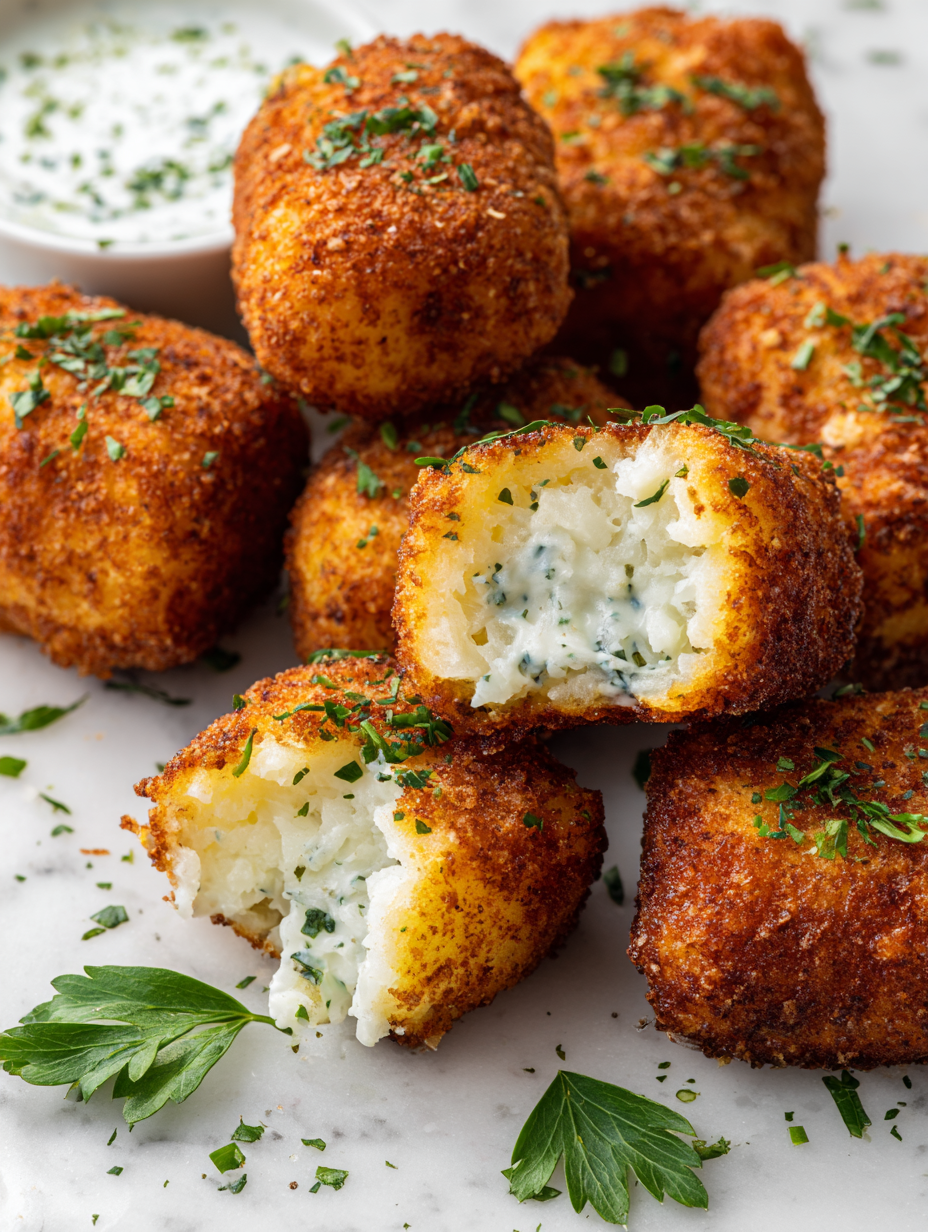
Potato Croquettes
Ingredients
Equipment
Method
- Place the peeled and cut potatoes into a large pot and cover with salted water. Bring to a boil and cook for about 15-20 minutes, until very tender and easily pierced with a fork. Drain thoroughly and return to the hot pot for a minute to evaporate excess moisture.
- Mash the hot potatoes with a potato masher or fork until smooth and creamy. Add softened butter, a pinch of salt and pepper, and the beaten egg. Mix well until the mixture is cohesive and slightly sticky.
- Divide the mashed potato mixture into equal portions and shape each into small oval or log shapes, about 2 inches long. Keep the shaped croquettes uniform for even frying.
- Set up your breading stations: place flour in a shallow dish, beaten egg in a bowl, and toasted panko breadcrumbs on a plate. Roll each croquette in flour, then dip into the egg, and finally coat generously with breadcrumbs, pressing lightly to adhere.
- Heat vegetable oil in a deep pan or skillet over medium-high heat until it reaches about 180°C / 356°F. Test the temperature by dropping in a small piece of bread—if it sizzles immediately, you're ready.
- Carefully place a few croquettes into the hot oil, making sure not to overcrowd the pan. Fry for 3-4 minutes, turning occasionally, until the croquettes are deep golden brown and crispy all over. Listen for a gentle crackling sound as they fry.
- Use a slotted spoon to remove the croquettes from the oil and place them on a wire rack or paper towels to drain excess oil. Let them rest for a minute or two until the crust is crackling and the interior is soft and fluffy.
- Serve the croquettes immediately while hot and crispy. They make a perfect snack or side dish with a squeeze of lemon or your favorite dipping sauce. Enjoy the crunchy exterior and tender inside with every bite!
Notes
Pro tips for perfect croquettes
- Bolded tip: Use panko breadcrumbs for an ultra-light, airy crunch that crackles loudly when fried.
- Bolded tip: Chill the shaped croquettes for 10 minutes before frying to help maintain their shape and prevent splattering.
- Bolded tip: Maintain oil temperature at 180°C / 356°F; too hot and they burn, too cold and they get greasy.
- Bolded tip: Test frying a single croquette first—look for a deep golden hue and listen for a crisp crackle.
- Bolded tip: Keep batches small; overcrowding lowers oil temperature, resulting in soggy croquettes.
- Bolded tip: Rest fried croquettes on a wire rack instead of paper towels to preserve their crispiness.
- Bolded tip: If croquettes crack or fall apart, chill the mixture longer or add a bit more egg for cohesion.
Common mistakes and how to fix them
- FORGOT to drain potatoes thoroughly → Do so to prevent soggy croquettes.
- DUMPED too much flour → Use just enough to coat for crispiness.
- OVER-TORCHED oil → Maintain temperature at 180°C / 356°F for even frying.
- MISSED resting time → Rest croquettes 1-2 minutes for optimal crunch.
Quick fixes for croquette mishaps
- When oil shimmers and crackles, it’s ready—don’t wait for smoke to avoid burning.
- Splash a small piece of bread—if it sizzles immediately, you’re good to go.
- Patch soggy croquettes by briefly reheating in the oven at 180°C / 356°F until crisp.
- When croquettes crack during frying, lower heat and fry in smaller batches to prevent over-browning.
- Shield burnt spots in oil with a paper towel, then add fresh oil to maintain consistent heat.
Prep, store, and reheat tips
- Prepare the potato mash and shape the croquettes up to a day in advance; keep them covered in the fridge to prevent drying out.
- Store raw, shaped croquettes in an airtight container in the fridge for up to 24 hours; they may need a light re-coat in breadcrumbs before frying.
- Cooked croquettes are best eaten fresh, but can be stored in the fridge for 1-2 days; reheat in the oven at 180°C / 356°F until crispy, about 10 minutes.
- Frozen croquettes can be made ahead and stored in a single layer in a freezer bag for up to 3 months; fry directly from frozen, adding an extra minute or two.
- Reheating croquettes will soften the crust if heated in the microwave; for best texture, re-crisp in the oven or air fryer, watching for that crackling sound and golden color.
Top questions about potato croquettes
1. Can I use different potatoes?
Yes, choosing the right potato like Yukon Gold makes a big difference in texture and flavor, especially for that tender inside. Russets produce a crispier exterior but may be less creamy.
2. Can I add cheese or herbs?
Absolutely. If you prefer a richer flavor, blend in some grated cheese or herbs into the mash before shaping. For a dairy-free version, coconut milk works well.
3. How do I know the oil is the right temperature?
Use a thermometer to keep the oil at around 180°C / 356°F. If the oil is too hot, croquettes burn quickly; too cool, and they turn greasy.
4. How many croquettes can I fry at once?
Fry in small batches, about 4-6 at a time, to keep the oil temperature steady. This ensures even cooking and crispy exteriors.
5. Should I chill the shaped croquettes before frying?
Shape the croquettes with damp hands to prevent sticking. Chill them for 10 minutes before frying to help keep their shape.
6. Why do croquettes crack open while frying?
If they crack open during frying, chill the mixture longer or add an extra egg for better binding. Keep the oil at the right temperature.
7. What type of breadcrumbs is best?
Use panko breadcrumbs for the crispiest crust. Toast them lightly before coating for extra flavor and crunch.
8. How do I reheat croquettes?
Reheat in the oven at 180°C / 356°F for about 10 minutes. They’ll regain their crispness and warm aroma, perfect for leftovers.
9. Can I make croquettes ahead of time?
You can prepare the mash and shape the croquettes a day ahead. Keep them covered in the fridge, then fry just before serving.
10. Can I freeze croquettes?
Yes, freeze uncooked croquettes in a single layer, then fry directly from frozen, adding a minute or two to cooking time.
Making potato croquettes isn’t just about the end result but the process—the smell of frying potatoes and that satisfying crackle. It’s a humble dish that reminds me how small details, like choosing the right potato, can elevate simple ingredients.
In a world of fast food, these croquettes slow me down, giving me a moment of focus and joy. They’re a quiet celebration of the tactile pleasure of shaping, breading, and frying, with each crispy bite carrying a bit of my kitchen’s story.

Hi, I’m Michael Anderson, the voice behind Overreacting To Salt. Yes, the name usually gets a laugh. And no, I am not actually afraid of salt. In fact, understanding salt and flavor balance is what inspired this entire blog.
 The voice behind Overreacting To Salt. Yes, the name usually gets a laugh. And no, I am not actually afraid of salt. In fact, understanding salt and flavor balance is what inspired this entire blog.
Overreacting To Salt is my space to talk honestly about cooking mistakes, kitchen wins, and the small details that make a big difference in flavor. I created it for home cooks who want to understand food better without feeling intimidated.
The voice behind Overreacting To Salt. Yes, the name usually gets a laugh. And no, I am not actually afraid of salt. In fact, understanding salt and flavor balance is what inspired this entire blog.
Overreacting To Salt is my space to talk honestly about cooking mistakes, kitchen wins, and the small details that make a big difference in flavor. I created it for home cooks who want to understand food better without feeling intimidated.