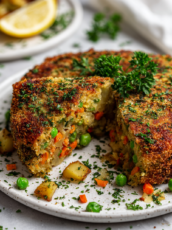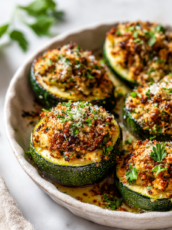
Eggplant Parmesan isn’t just a recipe; it’s a cozy, forgiving dish that welcomes whatever you’ve got in the fridge. Sometimes I find myself tossing in leftover cheese or a handful of wilted herbs just to make it feel fresh and personalized. It’s perfect for lazy weekends when spontaneity and comfort are what I crave most.
What I love most is how adaptable it is—no need for perfection, just a good eye and a little patience. Even if the eggplants are a bit crooked or the sauce isn’t perfectly smooth, it still comes out hearty and satisfying. It’s a dish that whispers, ‘Make me your own,’ which is pretty rare for something so classic.
Focusing on how eggplant Parmesan can be a forgiving, cozy dish that adapts to whatever you have in the fridge, making it perfect for lazy weekends or last-minute dinners.
The forgiving charm of eggplant
- I love how eggplant soaks up the tomato sauce, turning silky and flavorful, almost like a comforting sponge.
- There’s a quiet pride in pulling off a dish that looks rustic but tastes deeply layered and satisfying.
- Sometimes I toss in a pinch of smoked paprika or a handful of fresh basil just to surprise my taste buds.
- The best part is the crispy edges on the eggplant slices, giving that perfect crunch with every bite.
- I’ve made this dish for friends who aren’t big eggplant fans, and watching their surprised reactions is priceless.
The story behind this recipe
- I first stumbled on this recipe during a chaotic week when I needed comfort and quick fixes. My fridge was a mess, and the eggplants looked so humble, yet I remembered how my grandma used to make something similar—simple, forgiving, and full of soul. That moment of improvisation turned into a dish I come back to whenever I want something warm and honest.
- Cooking this dish feels like a small act of rebellion against perfection. It’s about embracing the imperfect, the slightly charred edges, the uneven slices, and still ending up with something hearty that sticks to your ribs. It’s a reminder that sometimes, the best food is the kind that’s made with patience and a little bit of love, no matter how messy it looks.
- heading: The warmth of improvisation
Historical tidbits and cultural roots
- Eggplant Parmesan has roots in Southern Italy, where eggplants are a staple due to their abundance and versatility.
- The dish evolved as a way to make the most of eggplants, which were once considered a bitter, neglected vegetable in Europe.
- Traditional recipes often include a layer of mozzarella and Parmesan cheese, reflecting Italian cheese-making traditions.
- In some regions, it’s served with a drizzle of basil-infused olive oil or a splash of balsamic vinegar for extra depth.
- The dish became popular in America during the Italian-American immigrant wave in the early 20th century, adapting to local ingredients.
Ingredient breakdown: key components
- Eggplant: I prefer firm, shiny eggplants with a deep purple hue; they soak up sauce beautifully and get crispy around the edges. If yours are soft or dull, they might be past their prime, swap them out for fresher ones.
- Breadcrumbs: I use a mix of panko and regular breadcrumbs for crunch, but if you want a lighter coating, try just panko. Toast them lightly before dredging for extra flavor and crunch.
- Tomato Sauce: I love a simple, chunky marinara with a splash of olive oil and garlic; it’s bright and tangy. For a richer flavor, simmer it longer or add a pinch of sugar to balance the acidity.
- Cheese: I combine shredded mozzarella for meltiness and Parmesan for sharpness. If you’re dairy-free, try a cashew-based cheese or nutritional yeast — it won’t melt the same, but it’ll still add umami.
- Herbs: Fresh basil is my go-to, adding a fragrant, peppery note. Dried herbs work in a pinch, but add them early to let the flavors bloom. A sprinkle of oregano or thyme can add depth.
- Olive Oil: Use good-quality extra virgin olive oil; it gives a fruity, rich aroma. If you’re out, a neutral vegetable oil works, but skip the flavorless options like canola for this dish.
- Eggplant Coating: I like to double-dip—flour, then egg, then breadcrumbs—to ensure a crispy crust. If you prefer gluten-free, try almond flour or gluten-free panko, but keep an eye on the crispiness.
Spotlight on key ingredients
Eggplant:
- I look for firm, shiny, deep purple eggplants. They soak up sauce and crisp up nicely. If yours are dull or soft, try a fresher one for better texture.
- When frying, it releases a slightly smoky aroma and turns beautifully golden around the edges, offering that satisfying crunch. If it’s soggy or limp, it needs a bit more salt or a shorter fry.
Breadcrumbs:
- I prefer panko for a light, airy crunch, but traditional ones work too. Toast them lightly before coating for extra flavor and crispness. They should crackle when frying.
- They absorb a little oil and turn golden, providing that essential crunch that contrasts the tender eggplant. If they burn quickly, reduce heat or stir more often during toasting.
Notes for ingredient swaps
- Oil-Free: Use a baking spray or parchment-lined sheet instead of frying, for a lighter crispy crust.
- Cheese-Free: Swap mozzarella and Parmesan with cashew cheese or nutritional yeast for a cheesy flavor without dairy.
- Gluten-Free: Replace traditional breadcrumbs with almond flour or gluten-free panko for crunch and texture.
- Vegan: Use plant-based cheese and skip eggs, or substitute with ground flaxseed mixed with water for dredging.
- Low-Sodium: Choose no-salt-added canned tomatoes and use less cheese or a reduced-salt cheese alternative.
- Herb Variations: Add chopped fresh oregano or thyme for different aromatic notes, or skip herbs altogether.
- Eggplant Type: Use smaller, thinner eggplants for a more tender bite or substitute with zucchini slices for a lighter version.
Equipment & Tools
- Large rimmed baking sheet: For baking or cooling fried eggplant slices.
- Sharp knife: To slice eggplants evenly.
- Shallow dishes: For dredging stations—flour, eggs, breadcrumbs.
- Frying pan (25cm/10 inches): For frying eggplant slices to crispy perfection.
- Spatula: To flip and handle eggplant slices carefully.
Step-by-step guide to eggplant Parmesan
- Equipment & Tools: Gather a large rimmed baking sheet, a sharp knife, a shallow dish for dredging, a frying pan (about 25cm/10 inches), and a spatula. You’ll also need paper towels for draining and a baking dish for layering.
- Preheat your oven to 200°C (390°F). Slice eggplants into 0.5cm (1/4 inch) thick rounds. Salt the slices generously and lay them on paper towels for 15 minutes to draw out moisture and bitterness.
- While they rest, prepare your dredging station: set up three shallow dishes—one with seasoned flour, one with beaten eggs, and one with a mix of panko and Parmesan. Toast the breadcrumbs lightly in a dry pan until golden for extra crunch.
- Rinse and pat dry the eggplant slices. Dredge each slice first in flour, then dip into the egg, and finally coat thoroughly with breadcrumb mixture. For an extra crispy crust, double-dip—flour, egg, breadcrumb again.
- Heat about 1cm (half inch) of olive oil in your frying pan over medium heat (around 160°C/320°F). Fry the coated eggplant slices in batches, about 2-3 minutes per side, until golden brown and crispy. Drain on paper towels.
- Meanwhile, spread a thin layer of tomato sauce on the bottom of your baking dish. Layer fried eggplant slices, then spoon over more sauce, sprinkle with shredded mozzarella and Parmesan. Repeat layers until all ingredients are used, ending with cheese on top.
- Bake in the preheated oven for 25-30 minutes. The cheese should be bubbling and golden, and the edges of the eggplant crispy. Check at 25 minutes; if it’s not quite there, give it a few more minutes. If cheese is burning, cover loosely with foil.
- Remove from oven and let sit for 10 minutes. Resting allows the flavors to meld and makes serving easier. Garnish with fresh basil or herbs, then slice and serve hot, with a side salad or crusty bread.
Let the assembled dish rest for 10 minutes to set. Serve slices with fresh herbs or extra sauce if desired. The resting helps prevent everything from sliding apart and enhances flavor meld.
How to Know It’s Done
- Eggplant slices are golden and crispy around the edges.
- Cheese on top is melted, bubbling, and slightly browned.
- Tomato sauce is thick and coats the layers without pooling.
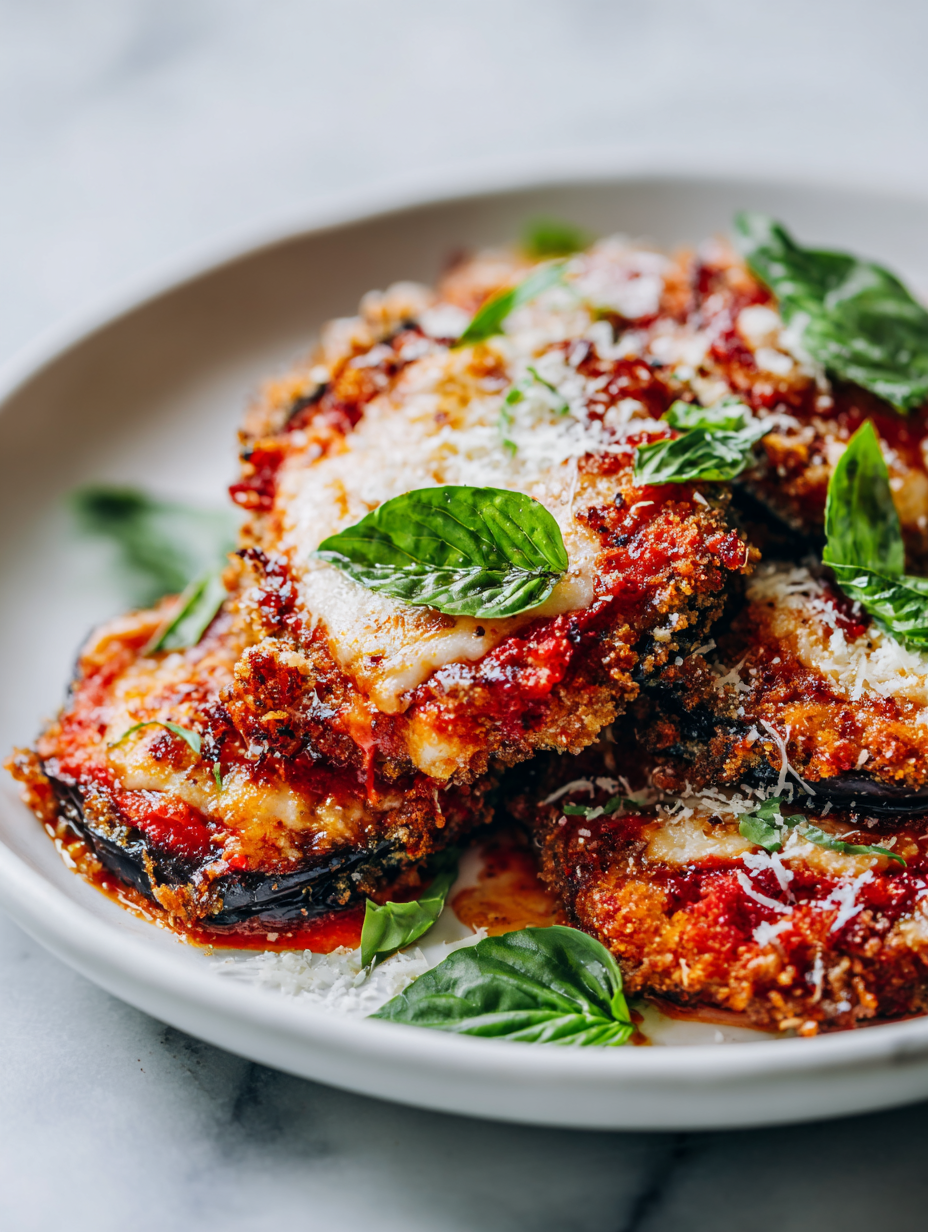
Easy Eggplant Parmesan
Ingredients
Equipment
Method
- Slice the eggplants into 0.5cm (1/4 inch) thick rounds and lay them on paper towels. Generously salt the slices and let sit for 15 minutes to draw out excess moisture. This step helps achieve a crispier crust.
- Meanwhile, prepare your dredging setup: place seasoned flour in one shallow dish, beaten eggs in another, and toast the panko breadcrumbs lightly in a dry pan until golden for added flavor and crunch. Mix the toasted breadcrumbs with grated Parmesan cheese in a third dish.
- Rinse the salted eggplant slices and pat them dry with paper towels. Dip each slice first in the seasoned flour, then into the beaten eggs, and finally coat thoroughly in the breadcrumb-Parmesan mixture. For an extra crispy coating, double-dip—flour, egg, then breadcrumbs again.
- Heat the olive oil in your frying pan over medium heat until shimmering. Fry the breaded eggplant slices in batches for about 2-3 minutes per side, until golden brown and crispy. Drain on paper towels to remove excess oil.
- Spread a thin layer of tomato sauce on the bottom of your baking dish. Layer the fried eggplant slices over the sauce, then spoon more sauce on top, followed by a sprinkle of shredded mozzarella. Repeat layering until all ingredients are used, ending with cheese on top.
- Bake in a preheated oven at 200°C (390°F) for 25-30 minutes. The cheese should be bubbling and golden, and the edges of the eggplant crispy. If the cheese starts to brown too quickly, lightly cover the dish with foil.
- Remove from the oven and let rest for 10 minutes to allow flavors to meld and the dish to set. Garnish with fresh basil leaves for a fragrant finish. Slice and serve hot with your favorite sides.
Notes
Pro tips for perfect eggplant Parmesan
- Bolded mini-head: Use a gentle touch when coating eggplant to keep slices intact and avoid tearing.
- Bolded mini-head: For extra crispness, let coated slices sit for 10 minutes before frying; it helps the crust set.
- Bolded mini-head: Maintain oil temperature around 160°C (320°F) for even frying without burning the breadcrumbs.
- Bolded mini-head: When frying in batches, keep cooked eggplant warm in a low oven (around 90°C/200°F) to prevent sogginess.
- Bolded mini-head: Use a slotted spoon to drain excess oil quickly, preserving crispiness and reducing grease.
- Bolded mini-head: For a golden finish, sprinkle a little extra Parmesan on top during the last 5 minutes of baking.
- Bolded mini-head: Rest the assembled dish for at least 10 minutes before serving to allow flavors to meld and slices to set.
Common mistakes and how to fix them
- FORGOT to dry eggplant slices → Pat dry to prevent sogginess and ensure crisp coating.
- DUMPED the sauce before layering → Keep some sauce aside for final topping and moistness.
- OVER-TORCHED the cheese → Watch cheese closely near the end to avoid burning, cover if needed.
- MISSED salting eggplant → Salt slices early to draw out moisture and reduce bitterness.
Quick fixes and pantry swaps
- When eggplant slices are soggy, splash with a little vinegar to brighten and crisp.
- If breadcrumbs aren’t sticking well, patch with a light spray of oil and re-coat.
- DUMPED the cheese too early? Shield with foil and bake a few more minutes for melty goodness.
- Over-torched cheese? Rescue by covering loosely with foil and lowering oven temp slightly.
- When sauce shimmers and crackles, it’s ready—rescue a dry patch by spooning extra sauce on top.
Prep, store, and reheat tips
- You can assemble the dish a day ahead; keep it covered in the fridge for up to 24 hours. The flavors will meld nicely, and the cheese might even melt more if left overnight.
- Refrigerate leftovers in an airtight container for up to 3 days. The eggplant edges may soften slightly, but reheating restores some crispness if done carefully.
- To reheat, cover with foil and bake at 180°C (350°F) for 20-25 minutes. The top should bubble and cheese re-melt, with crispy edges returning if you broil for a minute at the end.
- For best sensory results, reheat gently to avoid drying out the eggplant. The sauce should be warm and fragrant, the cheese gooey again, and the crust still slightly crisp if warmed properly.
Top questions about Eggplant Parmesan
1. How do I choose the best eggplant?
Use firm, shiny eggplants with deep purple skins. If yours are dull or soft, pick fresher ones for better texture and flavor.
2. Should I salt the eggplant before cooking?
Salt the slices generously and let them sit on paper towels for 15 minutes. This draws out moisture and bitterness.
3. What type of breadcrumbs work best?
Use a mix of panko and traditional breadcrumbs for crunch. Toast them lightly to enhance flavor and crispness.
4. How do I fry eggplant slices properly?
Fry in about 160°C (320°F) oil until golden, about 2-3 minutes per side. Drain on paper towels to keep crisp.
5. How do I assemble the dish?
Layer fried eggplant, sauce, and cheese in a baking dish. Repeat, ending with cheese on top. Bake at 200°C (390°F) for 25-30 minutes.
6. Should I rest the dish before serving?
Let the baked eggplant Parmesan rest for 10 minutes. This helps it set and makes slicing easier.
7. Can I prepare this in advance?
Yes, leftovers keep well in the fridge for 3 days. Reheat covered in the oven at 180°C (350°F) for 20 minutes.
8. What if the cheese over-browns or gets soggy?
If cheese burns, cover loosely with foil and lower oven temp slightly. For sogginess, re-crisp in the oven briefly.
9. How do I keep the eggplant crispy?
Use a slotted spoon to drain excess oil after frying. This keeps the dish from becoming greasy and preserves crispness.
10. What are good substitutions for dairy and gluten?
For a dairy-free version, substitute with cashew cheese or nutritional yeast. For gluten-free, use almond flour or gluten-free panko.
Eggplant Parmesan is more than just a meal; it’s a reminder that comfort food can be forgiving and adaptable. When I make it, I love the way the crispy edges contrast with the saucy, melty layers—each bite pulling me back to simple, honest cooking.
In times when I need something warm but not fussy, this dish always feels right. It’s perfect for a quiet weekend or when I want to clear out the fridge without sacrificing flavor. Honestly, it’s a dish I keep coming back to, again and again, for that cozy, imperfect charm.

Hi, I’m Michael Anderson, the voice behind Overreacting To Salt. Yes, the name usually gets a laugh. And no, I am not actually afraid of salt. In fact, understanding salt and flavor balance is what inspired this entire blog.
 The voice behind Overreacting To Salt. Yes, the name usually gets a laugh. And no, I am not actually afraid of salt. In fact, understanding salt and flavor balance is what inspired this entire blog.
Overreacting To Salt is my space to talk honestly about cooking mistakes, kitchen wins, and the small details that make a big difference in flavor. I created it for home cooks who want to understand food better without feeling intimidated.
The voice behind Overreacting To Salt. Yes, the name usually gets a laugh. And no, I am not actually afraid of salt. In fact, understanding salt and flavor balance is what inspired this entire blog.
Overreacting To Salt is my space to talk honestly about cooking mistakes, kitchen wins, and the small details that make a big difference in flavor. I created it for home cooks who want to understand food better without feeling intimidated.