Baked falafel might not have the crispy crunch of its fried cousin, but it brings a comforting warmth that’s hard to beat. There’s something about shaping those spiced chickpeas and popping them in the oven that feels like a small act of love, especially when you’re after something satisfying without the heaviness of deep frying.
Making falafel at home often feels like a bit of a ritual—measuring, pulsing, shaping—yet baking keeps it straightforward. The smell of cumin and garlic wafts through the kitchen, promising a meal that’s both familiar and a little different, a gentle reminder that simplicity can still deliver real flavor.
This recipe is for those nights when you want something nourishing but don’t want to mess with hot oil. It’s a way to enjoy that iconic Middle Eastern flavor with less fuss, more ease, and a little more peace of mind. Sometimes, the best comfort food is the one that’s quick to put together and easy to love.
Focusing on the simplicity and warmth of baked falafel as a comforting, less greasy alternative to the traditional fried version, highlighting the ease of making it at home without sacrificing flavor or texture.
The story behind this recipe
- This baked falafel recipe came from a lazy Sunday craving—something hearty but not greasy. I had a bag of chickpeas that needed using, and I remembered how my grandmother used to bake her falafel to avoid the deep-fry mess. It’s funny how a simple change in technique can make such a difference, making the whole process feel calmer and more controlled.
- I wanted something that felt familiar but a little lighter, perfect for a quick lunch or a cozy dinner. Baking gave me that crispy exterior without the oil splatters and lingering smell, and honestly, the smell of cumin and garlic baking in the oven still makes me smile. It’s like a quiet nod to tradition, but with a modern twist I can actually pull off on a weeknight.
- heading
- story_type
Key ingredients and tips
- Chickpeas: I use canned for convenience, but dry soaked chickpeas give a firmer, nuttier bite—soak overnight for best texture.
- Fresh herbs: Parsley and cilantro brighten the flavor—don’t skimp, even a handful makes a big difference in freshness and vibrancy.
- Garlic & onion: I love a good punch of garlic and a touch of onion for depth—roast the garlic for a smoky sweetness if you prefer milder flavor.
- Spices: Cumin and coriander are my backbone—toast them lightly first to release their warm, aromatic oils before grinding.
- Binding agent: A little flour or breadcrumbs helps hold everything together—start small, add more if the mixture feels too sticky or loose.
- Sesame seeds: I sprinkle a few on top before baking for a nutty crunch and visual appeal—try black sesame for a striking look.
- Olive oil: Just a drizzle on the baking sheet keeps the falafel from sticking and adds a subtle richness—use good-quality oil for best flavor.
Spotlight on key ingredients
Chickpeas:
- I prefer canned for ease, but dried soaked chickpeas give a nuttier, denser bite—soak overnight for best texture.
- Herbs: Parsley and cilantro add a fresh, vibrant punch—use a generous handful for maximum brightness, even if it feels like a lot.
- Garlic: Roasted garlic brings a smoky sweetness that balances the spices—skip raw if you want a milder, sweeter flavor.
Sesame Seeds:
- Cumin: Toast lightly before grinding to release warm, aromatic oils—adds a smoky, earthy depth that defines falafel.
- Sprinkle on top before baking for a nutty crunch—black sesame gives a striking, dramatic look and flavor.
Notes for ingredient swaps
- Canned Chickpeas: I use canned for convenience, but dried soaked chickpeas give a nuttier, firmer bite—soak overnight for best texture.
- Fresh Herbs: Parsley and cilantro brighten the flavor—don’t skimp, even a handful makes a big difference in vibrancy and freshness.
- Garlic & Onion: I love a good punch of garlic and a touch of onion for depth—roast the garlic for a smoky sweetness if you prefer milder flavor.
- Spices: Cumin and coriander are my backbone—toast them lightly first to release their warm, aromatic oils before grinding.
- Binding Agent: A little flour or breadcrumbs helps hold everything together—start small, add more if the mixture feels too sticky or loose.
- Sesame Seeds: I sprinkle a few on top before baking for a nutty crunch and visual appeal—try black sesame for a striking look.
- Olive Oil: Just a drizzle on the baking sheet keeps the falafel from sticking and adds a subtle richness—use good-quality oil for best flavor.
Equipment & Tools
- Food processor: To pulse and combine ingredients efficiently.
- Baking sheet: To hold the falafel while baking evenly.
- Parchment paper or oil spray: To prevent sticking and make cleanup easier.
- Spatula or hands: To shape and transfer the falafel.
- Measuring spoons: For precise addition of spices and lemon juice.
Baked Falafel Step-by-Step
- Preheat your oven to 200°C (390°F). Line a baking sheet with parchment paper or lightly oil it to prevent sticking.
- In a food processor, combine 2 cups of cooked chickpeas, 1 small onion (roughly chopped), 3 cloves garlic, 1 teaspoon cumin, 1 teaspoon coriander, and a handful of parsley and cilantro. Pulse until coarse but not pureed. You want some texture.
- Add 2 tablespoons of flour or breadcrumbs and a teaspoon of lemon juice. Pulse again until the mixture holds together when pressed. If it’s too loose, sprinkle in a little more flour.
- Using wet hands, shape the mixture into small patties or balls, about 2 inches across. Place them evenly spaced on the prepared baking sheet.
- Sprinkle sesame seeds on top for crunch and visual appeal. Drizzle or spray lightly with olive oil—just enough to give a slight shimmer and help crisp the exterior.
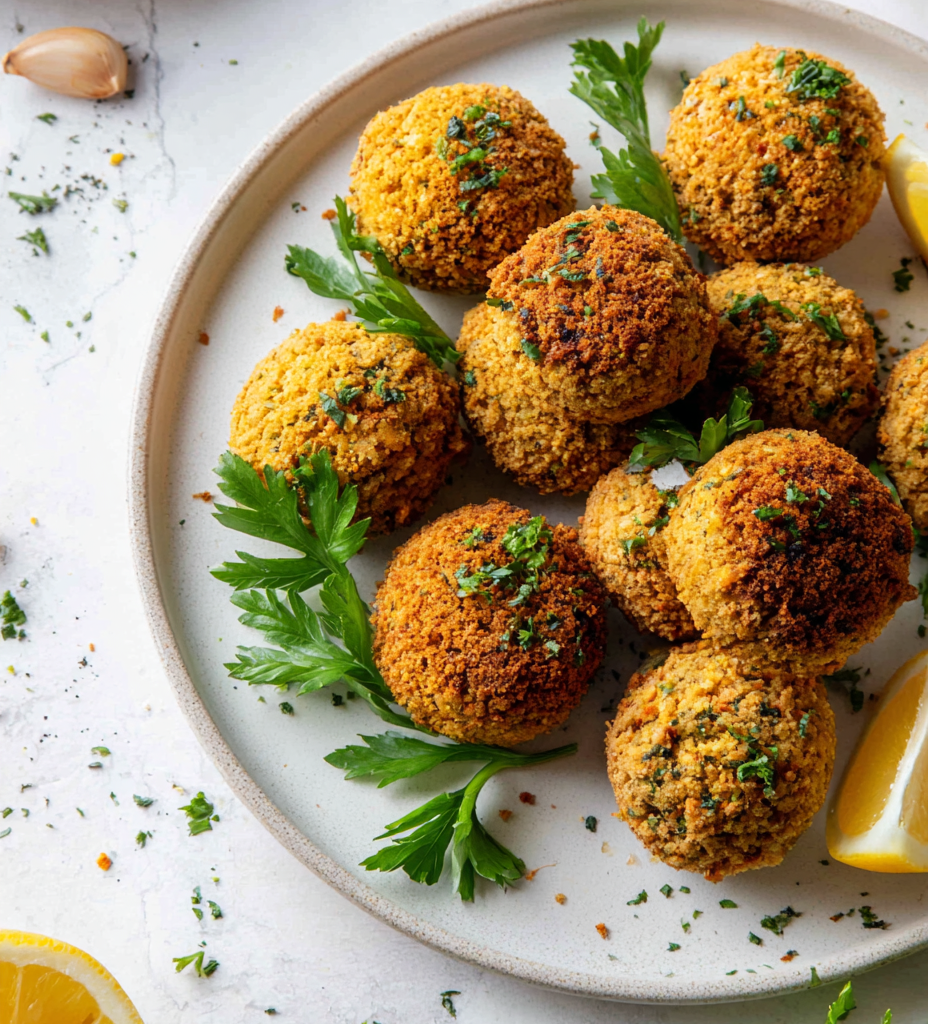
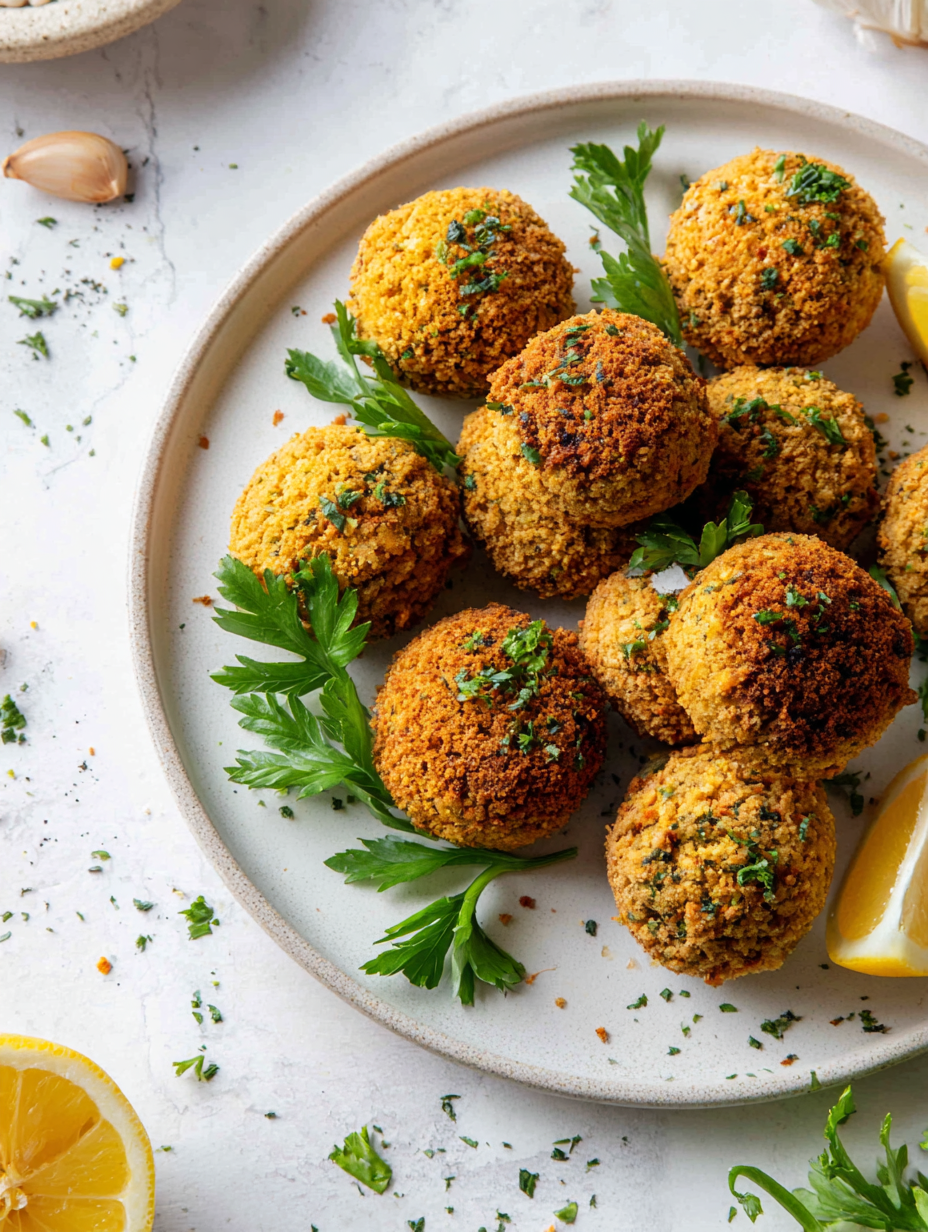
- Bake in the oven for 20-25 minutes, turning once halfway through. The falafel should turn golden brown around the edges and smell warm and spiced. They might crack a little on top, which is fine.
- Once baked, let the falafel rest for 5 minutes on the baking sheet before transferring to a plate. This helps firm up the exterior and makes handling easier.
- Serve with fresh pita, tahini, or a simple yogurt sauce. They should be crispy outside, tender inside, and infused with fragrant cumin and garlic.
- Checkpoints: The exterior is golden and slightly crispy; the inside feels firm but not dense; and there’s a fragrant aroma of garlic and spices.
Allow the baked falafel to rest for 5 minutes on the baking sheet before serving to firm up. Serve warm with your favorite condiments or in pita pockets. Drizzle with tahini or a squeeze of lemon for extra brightness.
How to Know It’s Done
- Golden brown exterior with a slight crackle.
- Interior feels firm but not dry, with a moist crumb.
- Aromatic smell of cumin, garlic, and fresh herbs.
Baked Falafel
Ingredients
Equipment
Method
- Place the chickpeas, chopped onion, garlic, toasted cumin and coriander, parsley, and cilantro into a food processor. Pulse several times until the mixture is coarse but still has some texture, resembling a chunky paste.
- Add the flour or breadcrumbs and lemon juice to the mixture. Pulse a few more times until it starts to come together; it should be moist but hold its shape when pressed. If it feels too loose, sprinkle in a bit more flour.
- Transfer the mixture to a bowl and refrigerate for about 30 minutes. This helps it relax and makes shaping easier.
- Preheat your oven to 200°C (390°F). Line a baking sheet with parchment paper or lightly spray with oil to prevent sticking.
- Using wet hands or a cookie scoop, shape the mixture into small patties or balls about 2 inches wide. Place each piece evenly spaced on the prepared baking sheet.
- Sprinkle sesame seeds on top of each falafel for a nutty crunch. Lightly spray or brush the falafel with olive oil for a golden finish.
- Bake in the oven for 20-25 minutes, turning once halfway through, until the falafel are golden brown and fragrant. They should crack slightly on top and feel firm when pressed.
- Remove from the oven and let rest for 5 minutes on the baking sheet. This helps firm up the exterior and makes handling easier.
- Serve warm with pita, tahini, or a yogurt sauce. The falafel should be crispy outside, tender inside, and aromatic with cumin, garlic, and herbs.
Pro tips for perfect baked falafel
- Chill the mixture: Rest the falafel mixture in the fridge for 30 minutes to help it hold shape better during baking.
- Use a cookie scoop: For evenly sized falafel, scoop and gently roll into balls or patties—uniform size ensures even baking.
- Avoid over-packing: When shaping, don’t press too hard; gentle handling keeps them tender inside and crispy outside.
- Bake on a hot sheet: Preheat your baking tray in the oven for 5 minutes before placing falafel—this promotes an instant sizzle and crispness.
- Spray generously: Lightly spray or brush falafel with oil before baking—this helps achieve a golden, crispy exterior without greasiness.
- Flip halfway: Turn the falafel after 12 minutes to ensure even browning and crispiness on all sides.
- Check for doneness: They’re ready when golden brown, fragrant, and firm to the touch—if they crack, they’re overbaked, so pull early.
Common mistakes and how to fix them
- FORGOT to preheat oven → Always preheat to ensure even baking and crisp exterior.
- DUMPED too much oil → Use just a light spray or drizzle for a healthier, non-greasy result.
- OVER-TORCHED the falafel → Bake until golden and fragrant; avoid burning by checking early.
- MISSED mixing ingredients thoroughly → Mix well to evenly distribute spices and herbs for balanced flavor.
Quick fixes and pantry swaps
- When falafel cracks open, gently press the edges together and bake a few extra minutes.
- Splash a little lemon juice or vinegar if falafel feels bland after baking.
- Patch dryness with a quick drizzle of tahini or yogurt sauce before serving.
- Shield delicate falafel from over-baking by lowering oven temperature slightly if they turn dark.
- Rescue undercooked falafel by returning to oven for 5 more minutes until firm and golden.
Prep, store, and reheat tips
- Prep the falafel mixture up to 24 hours ahead; keep chilled in an airtight container for a fresh, vibrant flavor.
- Shape the falafel into patties or balls and store on a plate covered with plastic wrap; they’ll keep well for up to 1 day in the fridge.
- Refrigerated falafel will develop a firmer texture; reheat in a 180°C (355°F) oven for 10 minutes until warmed through and crispy on the outside.
- Store baked falafel in an airtight container for up to 3 days; reheat with a light spray of oil and bake until golden and crackly again.
- For longer storage, freeze baked falafel for up to 1 month; thaw in the fridge overnight and reheat in the oven for best texture and flavor.
Top questions about baked falafel
1. Can I use dried chickpeas instead of canned?
Use canned chickpeas for convenience, but soaked dried ones give a firmer, nuttier bite. Soak overnight for best texture.
2. Will baked falafel be as crispy as fried?
Yes, baking reduces greasiness, but it may not be as crispy as fried. Expect a tender, slightly chewy exterior.
3. How do I know when baked falafel are ready?
Keep an eye on the oven; falafel are done when golden, fragrant, and firm. Usually about 20-25 minutes at 200°C (390°F).
4. Can I freeze baked falafel?
Yes, you can freeze baked falafel for up to a month. Reheat in the oven at 180°C (355°F) until crispy and warmed through.
5. Can I customize the herbs and spices?
Use fresh herbs like parsley and cilantro for brightness. If you want more flavor, add a pinch of sumac or paprika to the mix.
6. How should I prepare the mixture for best shaping?
Mix ingredients thoroughly to ensure even distribution of spices and herbs. Rest the mixture for 30 minutes in the fridge to help it hold shape.
7. How do I shape the falafel properly?
Shape with wet hands or a cookie scoop for uniform size. Rest shaped falafel on a tray before baking to prevent cracking.
8. Should I oil the falafel before baking?
Spray or brush lightly with olive oil before baking. This helps achieve a golden, crispy exterior without excess oil.
9. How do I store and reheat baked falafel?
Store leftovers in an airtight container in the fridge for up to 3 days. Reheat in the oven or toaster oven for best results.
10. What if my falafel crack during baking?
If falafel crack or fall apart, chill the mixture longer or add a bit more flour. Overbaking can also cause cracks, so watch the color.
Baked falafel is a quiet revelation—less greasy, but just as flavorful and satisfying. It’s a reminder that simple techniques can elevate comfort foods into something a little more mindful and approachable.
Whenever I make this, I think about how easy it is to enjoy those warm, fragrant bites without the mess or fuss. It’s a small, honest pleasure—something I come back to when I crave a quick, wholesome bite.
I grew up in a small town in Oregon, United States. After years of experimenting (and failing) with recipes, I realized food wasn’t just about cooking—it was about connection.