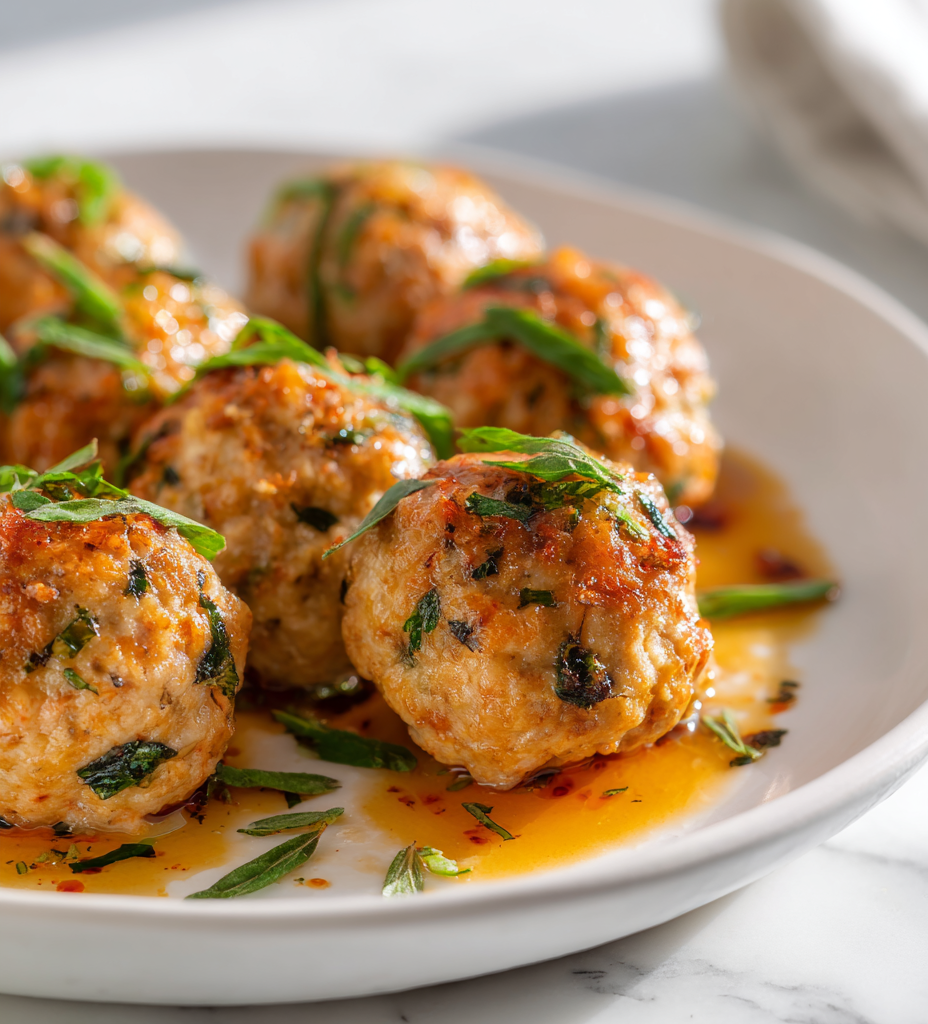
Baking chicken meatballs instead of frying them is a small shift that makes a big difference. It keeps them juicy and tender, without the greasy mess. Plus, the oven does most of the work, which means less fuss and more time to focus on the flavors.
There’s something satisfying about knowing these meatballs are healthier but still packed with that savory, seasoned punch. The smell of garlic, herbs, and baked chicken filling the kitchen makes it feel like a weekend treat, even on a busy weeknight.
This method also frees up the stove for other dishes, making it perfect for a quick, wholesome meal. It’s a simple change, but I find myself leaning into it more often—less oil, less cleanup, still plenty of comfort in every bite.
Focusing on how baking the meatballs instead of frying them preserves their juiciness and enhances flavor, making for a healthier yet equally satisfying twist on a classic comfort food.
The story behind this recipe
- This recipe comes from a moment of kitchen chaos—trying to get dinner on the table while the kids were arguing over snacks. I wanted something quick, filling, and that I could make in one dish without extra fuss.
- Baking the meatballs emerged as a solution—less oil splatter, less mess, and the oven does all the work. It’s a no-fuss method that still delivers juicy, flavorful bites.
- I remember the first time I made these; the smell of garlic and herbs wafting through the house made everyone stop and just inhale. That’s when I knew I had a keeper.
Key ingredients and tips
- Ground chicken: I prefer a mix of dark and white meat for juiciness. If yours feels leaner, add a splash of olive oil to keep them tender.
- Breadcrumbs: I use plain, unseasoned breadcrumbs—they soak up juices and keep the meatballs moist. Swap with crushed oats if you need gluten-free, but expect a slightly different texture.
- Egg: The binder that keeps everything together. If you’re out, a flax egg works—just mix 1 tbsp ground flaxseed with 3 tbsp water and let it sit until gel-like.
- Garlic & herbs: Fresh garlic bursts with aroma, but roasted garlic adds a sweet, mellow depth. Use whatever’s handy, just don’t skip the herbs—they’re the backbone.
- Parmesan: I love the salty kick, but nutritional yeast can add umami without dairy. Expect a different cheesy note, but still satisfying.
- Olive oil: A drizzle before baking gives a slight crispness and keeps them from sticking. Use avocado oil if you prefer a milder flavor but keep it light.
- Seasoning: Salt and pepper are essentials, but a pinch of smoked paprika or a squeeze of lemon zest can lift the flavor into new territory.
Spotlight on key ingredients
Ground chicken:
- I like to mix dark and white meat for juiciness. It feels tender and flavorful, especially when baked just right.
- It’s soft and slightly sticky when raw, but during baking, it firms up and develops a subtle, appealing sheen. Juices run clear when cooked through.
Breadcrumbs:
- I opt for plain, unseasoned ones—they soak up juices, keeping the meatballs moist. Using crushed oats works in a pinch, but expect a different texture.
- They absorb moisture and swell during baking, helping the meatballs stay tender and light. Watch for them to turn golden as a sign of good baking.
Notes for ingredient swaps
- Dairy-Free: Swap Parmesan for nutritional yeast for a cheesy umami flavor without dairy, but expect a slightly milder, nuttier note.
- Gluten-Free: Use crushed oats or almond flour instead of breadcrumbs. They absorb juices well, though the texture will be a bit denser.
- Low-Sodium: Choose unsalted breadcrumbs and reduce added salt. Herbs and garlic will shine through more distinctly.
- Herb Variations: Fresh basil or oregano can replace parsley; just chop finely for a burst of seasonal aroma.
- Protein Twist: Ground turkey or lean beef can replace chicken. Expect a richer, more robust flavor with beef, or a leaner, slightly drier bite with turkey.
- Oil Choices: Olive oil works best, but avocado oil adds a milder flavor and similar crispness. Use sparingly to avoid greasiness.
- Flavor Boost: Add a splash of lemon juice or zest to brighten the overall flavor profile, especially if using milder meats.
Equipment & Tools
- Large mixing bowl: Combine ingredients evenly.
- Baking sheet: Hold meatballs during baking.
- Parchment paper or silicone mat: Prevent sticking and easy cleanup.
- Meat scoop or tablespoon: Portion meatballs uniformly.
- Oven thermometer: Ensure accurate oven temperature.
- Probe thermometer: Check internal temperature.
Step-by-step guide to baked chicken meatballs
- Preheat your oven to 200°C (390°F). Prepare a large baking sheet by lining it with parchment paper or a silicone mat for easy cleanup.
- In a large mixing bowl, combine 1 pound ground chicken, 1/2 cup breadcrumbs, 1 beaten egg, 2 minced garlic cloves, 2 tbsp chopped fresh herbs (parsley or basil), 1/4 cup grated Parmesan, 1 tsp salt, and 1/2 tsp black pepper.
- Gently mix everything together with your hands or a spoon until just combined. Avoid overmixing, which can make the meatballs tough.
- Using a 1.5-inch scoop or your hands, form the mixture into evenly sized balls. Place each ball on the prepared baking sheet, spacing them about 1 inch apart.
- Lightly drizzle or spray the meatballs with olive oil. This will help them develop a slight crispness and prevent sticking.
- Bake in the preheated oven for 20-25 minutes. The meatballs should turn golden brown and feel firm when gently pressed.
- At the 15-minute mark, rotate the baking sheet for even browning. Keep an eye on them as oven times can vary.
- Once baked, check the internal temperature with a probe thermometer; it should read 75°C (165°F). The outside should be caramelized and slightly crisp, while the inside remains juicy.
- Remove from the oven and let the meatballs rest for 5 minutes on the baking sheet. Resting helps retain juices and makes handling easier.
- Serve hot with your favorite sauce or pasta, or let cool for leftovers.
Let the meatballs rest for 5 minutes off the oven to lock in juices. Serve immediately or cool completely before storing in airtight containers.
How to Know It’s Done
- Probe temperature reaches 75°C (165°F).
- Meatballs are golden and slightly crispy on the outside.
- Juices run clear when gently pressed, and they feel firm but tender.
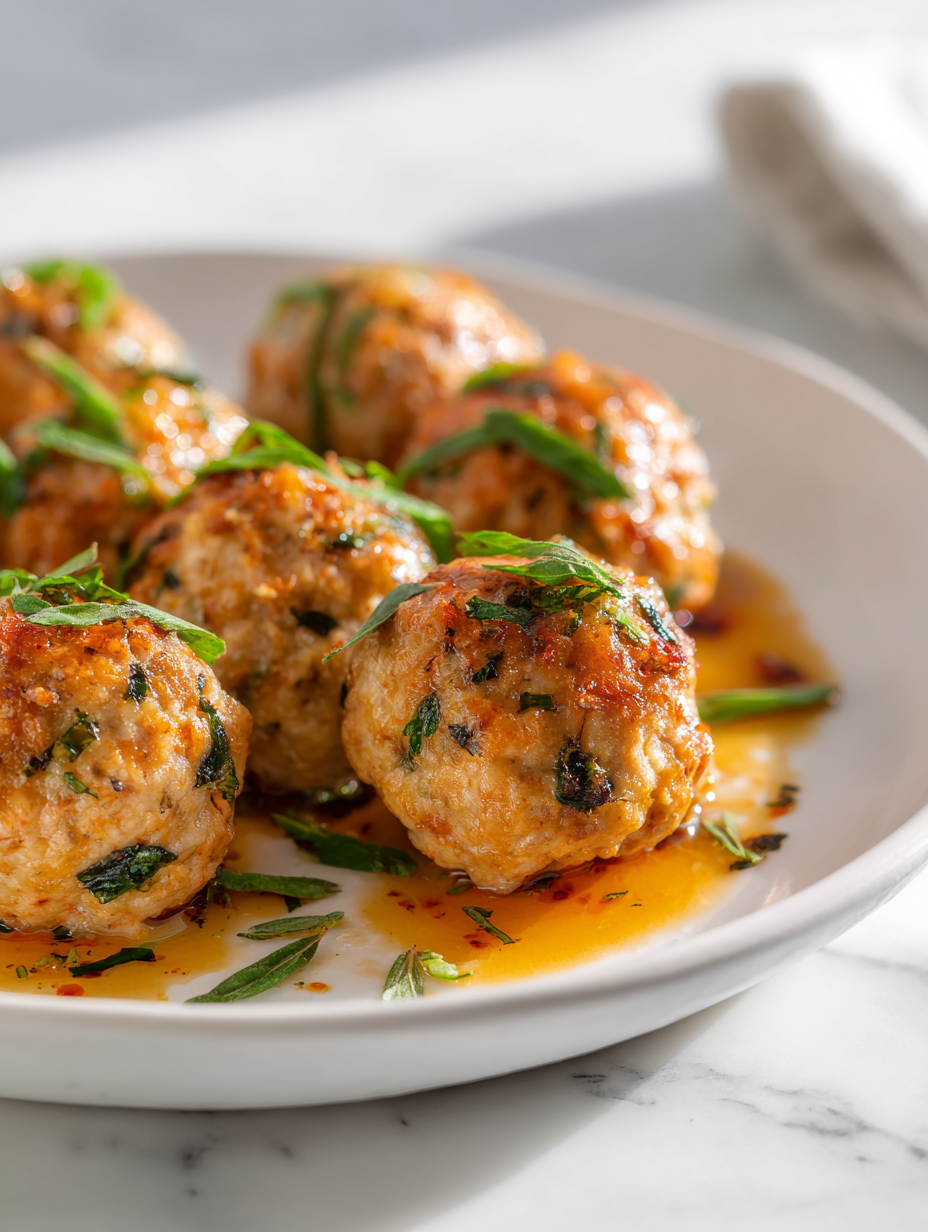
Baked Chicken Meatballs
Ingredients
Equipment
Method
- Preheat your oven to 200°C (390°F) and line a baking sheet with parchment paper or a silicone mat, making cleanup a breeze.
- In a large bowl, combine the ground chicken, breadcrumbs, beaten egg, minced garlic, chopped herbs, grated Parmesan, salt, and pepper. Gently mix everything together using your hands or a spoon until just combined, being careful not to overmix to keep the meatballs tender.
- Using a meat scoop or tablespoon, portion out the mixture and gently roll it into 1.5-inch balls, placing each on the prepared baking sheet with space in between.
- Lightly drizzle or spray the meatballs with olive oil, which will help them develop a slight crispness and prevent sticking during baking.
- Bake in the preheated oven for 20-25 minutes, rotating the baking sheet halfway through for even browning. The meatballs should turn a beautiful golden brown and feel firm when gently pressed.
- Check the internal temperature with a probe thermometer; it should read 75°C (165°F). If needed, bake for a few more minutes until fully cooked and juices run clear.
- Remove the meatballs from the oven and let them rest on the baking sheet for about 5 minutes. This helps them retain their juices and finish cooking internally.
- Serve the baked chicken meatballs hot with your favorite sauce or pasta, or let them cool completely for leftovers that can be reheated easily.
Pro Tips for Perfect Baked Meatballs
- Use a gentle hand when mixing to keep the meatballs tender and avoid dense bites.
- Chill the mixture for 15 minutes before shaping—this helps everything stick together better.
- Roll the meatballs evenly for uniform cooking and browning; slightly larger balls stay juicier.
- Spray or brush with oil before baking to achieve a golden, slightly crisp exterior.
- Rotate the baking sheet halfway through to prevent uneven browning, especially if your oven heats unevenly.
- Check internal temperature with a probe; 75°C (165°F) ensures they’re safely cooked and juicy.
- Let the meatballs rest for 5 minutes after baking to lock in juices and finish cooking internally.
Common mistakes and how to fix them
- FORGOT to preheat oven → Always start with a hot oven to ensure even cooking.
- DUMPED all ingredients together → Mix gently to keep meatballs tender and moist.
- OVER-TORCHED the meatballs → Keep an eye on baking time; they turn golden at 20 minutes.
- FAILED to check internal temp → Use a probe thermometer; 75°C (165°F) means done.
Quick fixes and pantry swaps
- When meatballs stick, splash a little more oil on the tray before baking.
- If the meatballs are dry, rescue with a quick brush of warm broth or sauce.
- Patch undercooked meatballs with a few extra minutes in the oven until firm and golden.
- When the oven’s too hot, lower the temperature slightly to avoid burnt edges.
- Use a pantry swap: crushed cornflakes instead of breadcrumbs for crunch and a nutty scent.
Prep, store, and reheat tips
- Prepare the meatball mixture up to 24 hours in advance; keep it covered in the fridge for easy shaping later, and the flavors will meld beautifully.
- Shape the meatballs and arrange them on a baking sheet, then refrigerate uncovered for up to 12 hours before baking; they stay firm and fresh, with a slight chill aroma.
- Cooked meatballs can be stored in an airtight container in the fridge for up to 3 days; reheat gently in a 160°C (320°F) oven until warmed through, until they shimmer with a slight crackle on the surface.
- For longer storage, freeze baked or raw meatballs for up to 3 months; wrap tightly in plastic wrap and then foil. Thaw overnight in the fridge before reheating, noting that they may lose some juiciness but retain flavor.
Top questions about baked chicken meatballs
1. How do I know when the meatballs are fully cooked?
Bake until the meatballs are golden and firm, about 20-25 minutes, with an internal temp of 75°C (165°F).
2. What’s the best way to check doneness?
Use a probe thermometer to check the internal temperature, look for a golden exterior, and ensure juices run clear.
3. They look undercooked—what now?
If the meatballs look pale or undercooked, pop them back in the oven for a few more minutes, but avoid overbaking.
4. Should I preheat the oven first?
Preheat your oven to 200°C (390°F) and line your baking sheet with parchment for easy cleanup and even cooking.
5. The mixture is too sticky or dry—what do I do?
If the mixture feels too wet, add a little more breadcrumbs; if too dry, mix in a splash of water or broth.
6. How big should I make the meatballs?
Shape the meatballs evenly, about 1.5 inches in diameter, to ensure uniform cooking and browning.
7. Should I rest the meatballs after baking?
Let baked meatballs rest for 5 minutes after coming out of the oven to keep juices in and improve texture.
8. How should I store and reheat leftovers?
Store leftovers in an airtight container in the fridge for up to 3 days; reheat in a warm oven or microwave.
9. Can I freeze baked meatballs?
Frozen raw or cooked meatballs can last up to 3 months; thaw in the fridge overnight before reheating.
10. Can I use other meats instead of chicken?
Yes, you can swap ground turkey or beef for chicken, but keep an eye on moisture and cooking time.
These baked chicken meatballs are a simple reminder that good food doesn’t need to be complicated. They hold onto their juiciness and flavor, even after reheating, making them perfect for busy weeknights or meal prep. Plus, the smell of garlic and herbs filling the kitchen is a small comfort in itself.
Honestly, once you get the hang of shaping and baking these, they become a go-to for a quick, satisfying meal. It’s about finding those little moments of ease and flavor—nothing fancy, just honest, good eating.
I grew up in a small town in Oregon, United States. After years of experimenting (and failing) with recipes, I realized food wasn’t just about cooking—it was about connection.