Pork belly often gets a bad rap for being overly rich, but when paired with a sharp, homemade apple puree, it transforms into something special. I love taking that crispy, fatty crackle of the pork and balancing it with something bright and tangy—like an apple mash that’s just a little sweet, just a little tart. It’s a reminder that the simplest contrasts can turn a humble cut into a memorable dish.
This recipe is about rediscovering those forgotten flavor matches, the kind that make you pause and savor each bite. I’ve made this many times, tweaking the apple puree until it’s just right—enough zing to cut through the pork’s richness, but with a smooth, velvety texture that melds everything together. It’s honest, a little messy, but always worth the effort.
Focusing on the forgotten art of balancing rich pork belly with a bright, homemade apple puree—highlighting the contrast between crispy, fatty bites and the zingy, slightly sweet apple mash that cuts through the heaviness.
Rediscovering Classic Flavor Balance
- That first crispy crackle of the pork belly still makes me smile, even after dozens of tries.
- I get oddly nostalgic thinking about how my grandma used to cook pork with apples, long before it was trendy.
- There’s a strange relief in balancing that fatty richness with something as simple as bright apple puree.
- Nothing beats the chaos of trying to get the pork crispy without burning the edges—it’s always a dance.
- I feel proud when a friend tastes this and says they’ve never had pork belly this lively, like it’s singing on the plate.
Rediscovering Classic Flavor Balance
This dish came together one chilly evening when I wanted something hearty but with a fresh twist. I’d been experimenting with pork belly, trying to get that perfect crackle, but what really made it special was pairing it with a homemade apple puree I had on hand. The contrast of the crispy, fatty pork with the bright, slightly tart apple mash just clicked in a way I hadn’t expected. It’s a reminder that simple, honest ingredients can surprise you when combined thoughtfully.
Historical & Cultural Tidbits
- Pork belly has roots in Chinese cuisine, where it’s been a staple for centuries, often slow-cooked or roasted to perfection.
- The pairing of pork and apples dates back to medieval times in Europe, where apples were used to cut through the richness of fatty meats.
- In French cuisine, similar dishes like ‘poitrine de porc aux pommes’ showcase the timeless harmony of fatty pork and sweet-tart fruit purees.
- Modern chefs have revived this classic combo, emphasizing crispy textures and bright, fresh accompaniments for a contemporary twist.
Key Ingredients and Tips
- Pork belly: I love that rich, fatty layer that crisps up so beautifully—make sure to score the skin well to get that crackle. Swap with duck or chicken thighs if you prefer a leaner option.
- Apple: Juicy, tart apples like Granny Smith give the puree a bright pop—skip the sweeter varieties if you want more zing, or add a squeeze of lemon to brighten it further.
- Salt: I use sea salt to enhance the pork’s flavor, but kosher salt works just as well—adjust the quantity to avoid oversalting the delicate puree.
- Sugar: A touch of sugar in the apple puree balances the tartness and rounds out the dish—omit if you prefer it less sweet or try honey for a floral note.
- Vinegar: A splash of apple cider vinegar lifts the puree’s brightness—be gentle so it doesn’t overpower the fruit’s natural sweetness.
- Herbs: Fresh thyme or sage adds aromatic depth—if you don’t have fresh, dried works too, just use less to prevent overpowering the pork’s richness.
- Oil: I favor neutral oil with a high smoke point for crisping the pork skin—vegetable or grapeseed oil are good choices; avoid butter here as it burns easily.
Spotlight on key ingredients
Pork belly:
- I love that rich, fatty layer that crisps up so beautifully—make sure to score the skin well to get that crackle. Swap with duck or chicken thighs if you prefer a leaner option.
- Apple: Juicy, tart apples like Granny Smith give the puree a bright pop—skip the sweeter varieties if you want more zing, or add a squeeze of lemon to brighten it further.
- Salt: I use sea salt to enhance the pork’s flavor, but kosher salt works just as well—adjust the quantity to avoid oversalting the delicate puree.
Apple:
- Juicy, tart apples like Granny Smith give the puree a bright pop—skip the sweeter varieties if you want more zing, or add a squeeze of lemon to brighten it further.
- Salt: I use sea salt to enhance the pork’s flavor, but kosher salt works just as well—adjust the quantity to avoid oversalting the delicate puree.
Ingredient Swap Tips
- Dairy-Free: Replace butter in the apple puree with coconut oil or a splash of almond milk for a smooth, dairy-free finish.
- Sweetener: Use honey or maple syrup instead of sugar in the puree for a more complex, floral sweetness.
- Vinegar: Swap apple cider vinegar for lemon juice to brighten the puree with a citrusy zing.
- Herbs: Fresh thyme can be replaced with sage or rosemary, just use less dried herbs to avoid overpowering.
- Apple Type: Granny Smith apples give sharpness; substitute with Fuji or Honeycrisp if you prefer sweeter, milder flavors.
- Pork Cut: If pork belly isn’t available, try pork shoulder for a slightly leaner, yet still rich, alternative.
- Oil: Neutral oils like vegetable or grapeseed are best for crisping, but if you want a smoky touch, try a light drizzle of smoked paprika oil.
Equipment & Tools
- Oven: To roast the pork at controlled temperatures
- Roasting rack: To elevate pork for even cooking and crackling
- Sharp knife: To score the pork skin precisely
- Baking tray: To catch drippings and support the rack
- Saucepan: To cook and puree the apples
- Immersion blender or fork: To blend or mash the apple puree
Step-by-step guide to pork belly with apple puree
- Preheat your oven to 180°C (350°F). Score the pork belly skin in a crisscross pattern, being careful not to cut into the meat. Rub the pork with salt, pepper, and a little fennel or five-spice if you like. Let it sit while you prepare the apple puree.
- Place the pork belly on a roasting rack inside a baking tray, skin side up. Roast for 30 minutes to start rendering the fat and crisping the skin. Keep an eye on the crackle; if it’s bubbling and turning golden, you’re on track.
- Reduce oven temperature to 150°C (300°F). Continue roasting for another 1.5 hours. Baste occasionally with the rendered fat to keep the meat moist. Check the skin’s crackle; it should be deep golden and crackling under gentle pressure.
- Meanwhile, peel and core the apples. Chop them roughly. In a saucepan, cook the apples with a splash of water, a squeeze of lemon, and a pinch of salt over medium heat for about 15 minutes until soft and fragrant.
- Puree the cooked apples using an immersion blender or mash with a fork until smooth. Adjust sweetness with a touch of sugar or honey, and add a splash of apple cider vinegar for brightness. Set aside.
- Once the pork is done, remove from the oven. Let it rest for at least 10 minutes, tented loosely with foil. Resting helps the juices redistribute, making the pork tender and easier to carve.
- Slice the pork belly into thick pieces, ensuring the skin remains crispy. Plate the slices with a generous spoonful of apple puree on the side. Serve immediately while the crackle is still crackling.
Rest the pork for at least 10 minutes, tented loosely with foil. Slice and serve immediately, pairing with the apple puree spooned generously alongside. Keep the pork warm if needed by tenting lightly.
How to Know It’s Done
- Pork skin is deep golden and crackling under gentle pressure.
- Meat registers 70°C (160°F) at the thickest part when tested with a probe.
- Apple puree is smooth, bright, with a slight tang from vinegar, and well-balanced in sweetness.
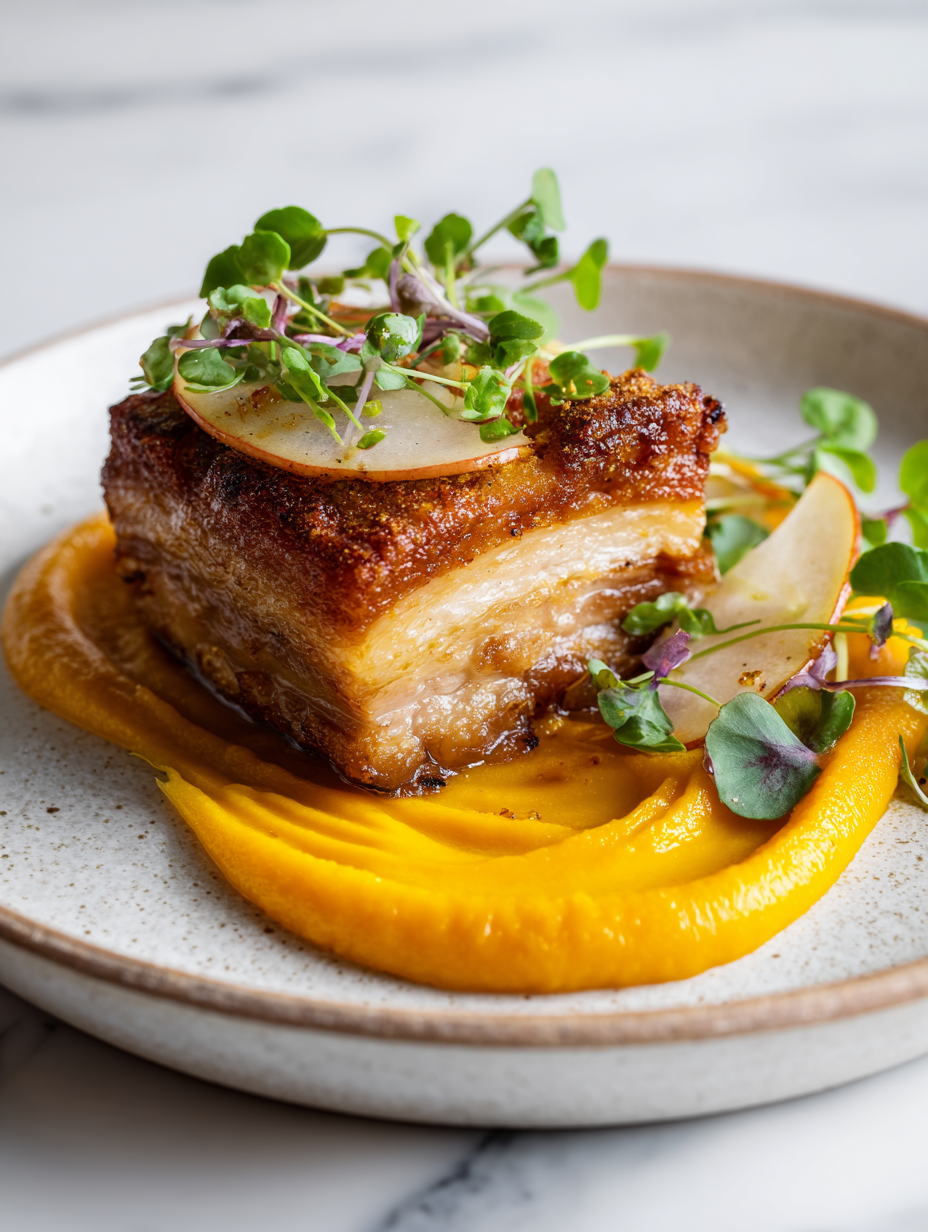
Crispy Pork Belly with Bright Apple Puree
Ingredients
Equipment
Method
- Preheat your oven to 180°C (350°F). Use a sharp knife to score the pork belly skin deeply in a crisscross pattern, taking care not to cut into the meat—this helps render the fat and create crisp crackling.
- Rub the pork belly all over with a teaspoon of sea salt, pressing it into the scored skin and meat. If desired, sprinkle with chopped fresh thyme or sage for aromatic depth. Let it sit while you prepare the apple puree.
- Place the pork belly on a roasting rack set inside a baking tray, skin side up. Roast for 30 minutes at 180°C to start rendering the fat and initiating crackling. You should hear a gentle sizzling as the skin begins to crisp.
- Reduce the oven temperature to 150°C (300°F). Continue roasting the pork for about 1.5 hours, basting occasionally with the rendered fat to keep the meat moist. Keep an eye on the crackling; it should turn deep golden and crackle under gentle pressure.
- While the pork roasts, peel and core the tart apples. Chop them into chunks and cook in a saucepan with a splash of water, a teaspoon of salt, a tablespoon of sugar or honey, and a splash of apple cider vinegar over medium heat for about 15 minutes, until soft and fragrant.
- Puree the cooked apples using an immersion blender or mash with a fork until smooth. Taste and adjust sweetness with more honey or sugar if needed, and add a little more vinegar if you want extra brightness. Set aside.
- Once the pork has achieved a deep golden crackle and the meat feels tender when pierced, remove it from the oven. Let it rest for at least 10 minutes, tented loosely with foil, to allow the juices to redistribute and ensure easier carving.
- Slice the pork belly into thick, crispy pieces, keeping the crackling intact. Plate each portion with a generous spoonful of the bright apple puree on the side.
- Serve immediately while the crackling is still crisp, pairing the rich, tender pork with the tangy, velvety apple puree for a balanced, satisfying dish.
Top Tips for Perfect Pork Belly
- Crispy Skin: Pat the pork belly skin dry thoroughly before scoring; moisture is the enemy of crackle.
- Even Roasting: Use a rack to elevate the pork for uniform heat and crispness all over.
- Temperature Check: Aim for 70°C (160°F) at the thickest part—meat should be tender but not falling apart.
- Apple Puree: Cook apples gently to preserve their bright, tart flavor—overcooking turns it dull and mushy.
- Season Generously: Salt the pork skin well; it helps draw out moisture and enhances crispiness.
- Rest Properly: Let the pork rest at least 10 minutes; this keeps juices in and makes carving easier.
- Serving Sharpness: Serve the apple puree slightly warm or at room temp for perfect contrast with crispy pork.
Common mistakes and how to fix them
- TOO LITTLE: Forgetting to score the pork skin leads to less crackle—score well for crispiness.
- OVER-COOKED: Over-roasting pork belly makes it dry—check for a deep golden crackle and tender meat.
- NOT ENOUGH: Skipping resting causes juices to run out—rest for at least 10 minutes to keep it juicy.
- UNDERSALTED: Under-seasoned pork or apple puree feels flat—season generously but taste as you go.
Quick Fixes for Pork Belly & Apple
- When skin isn’t crackling, splash a little more salt and bake at higher heat for 5 minutes.
- If pork belly’s too greasy, blot with paper towel and increase oven temperature for crisping.
- Dumped apple puree too tart? Add a touch of honey or sugar to balance the brightness.
- Overcooked pork? Rest it immediately and serve with a squeeze of lemon to brighten flavors.
- When apple puree separates, blend it again or stir vigorously to recombine the texture.
Prep, Store, and Reheat Tips
- Pork belly can be seasoned and scored a day ahead; keep it uncovered in the fridge to maintain skin dryness for optimal crackle.
- Apple puree can be made 1–2 days in advance; store in an airtight container in the fridge, where it will keep for up to 3 days, developing a richer flavor over time.
- Refrigerated pork belly should be reheated in a hot oven (around 180°C/350°F) for 10–15 minutes until warmed through and crispy again, with some crackling restored.
- Reheat apple puree gently on the stove over low heat, stirring occasionally, until warm. It might thicken slightly—add a splash of water or lemon juice to loosen if needed.
- For longer storage, both pork and puree can be frozen for up to a month. Thaw in the fridge overnight and reheat as above, noting that pork may lose some crispness.
Top Questions About Pork Belly with Apple Puree
1. How do I choose the best pork belly?
Look for a pork belly with a good layer of fat and a firm texture. The skin should be dry and intact for optimal crackling.
2. How do I get crispy pork skin?
Score the skin deeply in a crisscross pattern without cutting into the meat. This helps the fat render and the skin crisp up.
3. What’s the best roasting method?
Roast the pork at high heat first to crackle the skin, then slow roast to tenderize the meat without drying it out.
4. How do I make the apple puree?
Cook the apples slowly with a little water and lemon to develop a bright, tangy flavor. Blend until smooth for the puree.
5. Why rest the pork belly?
Rest the pork for at least 10 minutes after roasting. This helps retain juices and makes slicing easier.
6. What type of apples work best?
Use tart apples like Granny Smith for a vibrant contrast. Adjust sweetness with sugar or honey as needed.
7. How can I improve crackling?
Ensure the pork skin is thoroughly dried and scored before roasting. Pat dry with paper towels and air-dry in the fridge overnight if possible.
8. What if the skin isn’t crispy?
If the skin isn’t crackling, increase oven temperature slightly and bake for a few extra minutes, watching carefully.
9. How do I store leftovers?
Store leftovers in an airtight container in the fridge. Reheat in a hot oven to restore crispness and warmth.
10. Why pair pork belly with apple puree?
Balance the richness by serving the pork with a tangy, bright apple puree that cuts through the fat and adds freshness.
This dish feels like a little celebration of contrasts—crispy, fatty pork paired with that sharp, velvety apple puree. It’s honest cooking that balances chaos and control, but always rewards your patience. When everything comes together, it’s a reminder that simple ingredients, treated thoughtfully, can turn into something memorable.
In a way, it’s about taking comfort in tradition while adding a small, bright twist. It’s perfect for a cozy weekend dinner or when you want to impress without fuss. Whatever your moment, this pairing always adds a little richness with a lively, fresh finish.

Hi, I’m Michael Anderson, the voice behind Overreacting To Salt. Yes, the name usually gets a laugh. And no, I am not actually afraid of salt. In fact, understanding salt and flavor balance is what inspired this entire blog.
 The voice behind Overreacting To Salt. Yes, the name usually gets a laugh. And no, I am not actually afraid of salt. In fact, understanding salt and flavor balance is what inspired this entire blog.
Overreacting To Salt is my space to talk honestly about cooking mistakes, kitchen wins, and the small details that make a big difference in flavor. I created it for home cooks who want to understand food better without feeling intimidated.
The voice behind Overreacting To Salt. Yes, the name usually gets a laugh. And no, I am not actually afraid of salt. In fact, understanding salt and flavor balance is what inspired this entire blog.
Overreacting To Salt is my space to talk honestly about cooking mistakes, kitchen wins, and the small details that make a big difference in flavor. I created it for home cooks who want to understand food better without feeling intimidated.